Review of Baptism in the Holy Spirit Initial Evidence and a New Model by Gordon L Anderson
Dennis A. Wright and Janine Gallagher Doot, "Missionary Materials and Methods: A Preliminary Study," inBecome Ye into All the Globe: The Growth & Development of Mormon Missionary Work, ed. Reid L. Nielson and Fred East. Forest (Provo, UT: Religious Studies Center, 2012), 91–116.
On Oct 15, 2004, a Church building satellite broadcast introduced mission leaders around the world to the new Preach My Gospel missionary guide. The introduction of this manual was the latest contribution to a century-old discussion regarding the best way for missionaries to present the gospel message. The Church leaders who introduced Preach My Gospel reflected on past materials and methods of missionary educational activity and concluded that changing times required "an improved way to share the fulness of the truth that God has placed on earth again." [1]
To even a casual observer, it was apparent that the Preach My Gospel programme emphasis was the adjacent step in an ongoing effort to better missionary effectiveness. An historical review of the changes in missionary methods and materials through the years provides insight into the forces that influence such change and how these changes then affect the way missionaries teach the gospel. This word will focus on a choice of methods and materials that characterized missionary work at various times in the history of the Church. The purpose of such a discussion is to promote an appreciation of how the Lord works with his servants in the context of history to amend their effectiveness.
Background
Early LDS missionaries who accustomed calls to serve received a promise that if they asked of the Lord, they would receive, and if they knocked, a way would open for them (encounter D&C 11:5). It then followed that as they prayed for assistance in preaching the gospel, they would develop a variety of methods and materials that reflected the insight that came through their experiences and prayers. The early on missionaries accustomed the Lord'due south admonition to "teach the principles of my gospel, which are in the Bible and the Volume of Mormon, in the which is the fulness of the gospel" (D&C 42:12). Because they received little or no direct teaching or materials, other than to teach from scriptural texts, these early missionaries relied on their own natural abilities as magnified past the Spirit to help them know how to proceed.
Itinerant Preaching and Tracting
During the first ii decades of the Church, LDS missionaries preached the restored gospel in a context dominated by the itinerant street preachers of the time. In response to accounts of the biblical missionaries, the itinerant tradition accepted the admonition of Christ to get forth and declare the kingdom of God to the "farthest office of the world" (Acts 1:viii; see also Luke 10:i–ix). They typically lacked formal training and believed that to be fully effective, they must be preachers "who combined learning with forceful delivery" in a passionate appeal that prompted their audiences to experience a spiritual witness of their message. [2]
Lacking formal training, nineteenth-century LDS missionaries labored in a manner similar to that of the itinerant preachers mentioned above. The experiences of the first LDS missionaries to Britain provide case evidence for this decision. [3] At that time, street preaching in Britain had reached new heights, led past nonconformist ministers such as George Whitefield and others who attracted thousands to hear the word of God. [4] Likewise, Mormon elders preached in church building buildings and public halls. When these were not available, they preached in homes and in public squares, where crowds frequently gathered to participate in public discussions of political and religious doctrines.
The LDS missionaries likewise held the aforementioned populist perspective every bit the nonconformist preachers of the fourth dimension. Deference to clerical authority and tradition was less of import than the reality that individuals could read the scriptures for themselves and learn the truths contained therein. The approach was also characterized past optimism considering salvation was open to all who sought the Lord and trusted in his promises. [5] The nonconformist preachers based their methods on the assumption that spontaneous speaking provided evidence that the Holy Ghost was directing their words. [vi] Building on the success of this tradition, the Mormon missionaries enthusiastically alleged their message of apostasy, restoration, an expanded scriptural cannon, and the promise of Zion. Like their peers, they accepted that extemporaneous preaching demonstrated to the audience that the Holy Spirit was indeed guiding their bulletin. Using a populist style familiar to those listening just amplified the power of the missionaries' message. [7]
Mormon missionaries too adopted the existing practice of distributing religious tracts as function of their effort to preach the restored gospel. [eight] Historically, the word tract referred to a leaflet, pamphlet, or other publication distributed publicly to inform or persuade public opinion. [9] With the ascent of the religious reformers, tracts became more aggressive and began to promote religious dissention in an endeavour to reform established churches or pb people away to new congregations. [ten] John Wesley believed that relatively few read the Bible because they "have no relish for it." Therefore, Wesley produced religious tracts that he believed people would read. To facilitate this work, he established the Society for the Distribution of Religious Tracts and became the beginning to use religious tracts on a large scale. [11]
Like Wesley and others, the Mormon elders also accepted the importance of distributing their message through published tracts. Finding it a claiming to distribute large quantities of the Book of Mormon, missionaries developed tracts that summarized Church doctrine and invited readers to learn more about the Restoration. [12] During this period, the tracts used past the missionaries divers the main missionary message and served every bit a method of attracting investigators.
In 1837, Parley P. Pratt developed ane of the first LDS tract while serving as a missionary in New York. Accepting the prevailing use of the religious tract, Pratt wrote and published a two-hundred-page booklet titled Voice of Warning. [thirteen] It became the first publication intended for missionary use in the Church. Later, as part of the British Mission experience, the missionaries created a variety of additional religious tracts. Typical of these publications were the Millennial Star, published in broadside form (1840), [14] and A[n] Interesting Account (1840). [15] At the tiptop of the British missionary try, itinerant preaching and the distribution of tracts served equally a major method of attracting individuals to the message of the restored gospel. The Mormon tracts, combined with the missionaries' preaching, proved successful—not because of an original format or mode of presentation, but because of their unique content and spirit.
Beginning Developments in Teaching Methods and Materials
At the end of the nineteenth century, secular journalists "published defamatory manufactures about the Church in popular magazines such equally Pearson's, Everybody's Magazine, McClure's, and Cosmopolitan." [16] Such publications propagated a negative epitome of the Church building throughout the The states and Europe through attacks upon the Mormon practise of plural matrimony and a perceived church oligarchy. [17] In an effort to gainsay erroneous information, leaders of the Church authored increasingly sophisticated publications that responded to fake accusations and clarified the beliefs of the Church. Representative of such efforts were B. H. Roberts'south The Gospel: An Exposition of Its First Principles (1888); [18] A Compendium of the Doctrines of the Gospel (1892), by Franklin D. Richards; [19] and The Articles of Religion (1899), written by James Due east. Talmage. [20] Missionaries used these progressively sophisticated publications to guide them as they taught the gospel to an increasingly disquisitional audition.
In 1903, the Elders' Journal, a publication of the South States Mission, appeared to recognize a relationship betwixt missionary preparation and missionary effectiveness. Therefore, this mission publication regularly provided written guidelines that trained missionaries in the effective use of tracts in contacting and pedagogy investigators. Issues of the Periodical suggested ideas for finer presenting the gospel message and added practical advice related to mission rules and practices. [21]
Further efforts to provide instruction for missionaries also appeared later in publications such as The Elders' Reference (1913) [22] and The Elders' Manual (1918). [23] These missionary guides included didactics on such topics as personal training, effective public speaking, proselyting approaches, mission rules, and mission assistants. They also suggested practical methods for devising daily schedules and gospel written report plans. [24] While such publications proved useful, they supplied little straight information on specific teaching methods. [25]
However, recognition of the demand to prepare missionaries continued to abound. Recognizing this need, Elder Brigham H. Roberts, a member of the Seventy, published a variety of articles and tracts intended to define a systematic arroyo to tracting and didactics. [26] His pamphlet On Tracting (1924) provided training in the use of printed cloth as the main missionary contact and didactics method. He wrote, "Tracting is the backbone of missionary work," 27] and he causeless that the effective distribution of religious tracts led to missionary success. Elder Roberts was 1 of the start to define a systematic approach to pedagogy by identifying guidelines for the constructive use of tracts in a teaching situation. The general portion of his work covered topics such as "On acquiring knowledge necessary to efficiency in tracting" and "How to enjoy tracting." Regarding the preparation of missionaries, Roberts noted, "In this system . . . a sort of elementary booklet was presented to the missionaries giving in very cursory class an account of Mormonism." [28]
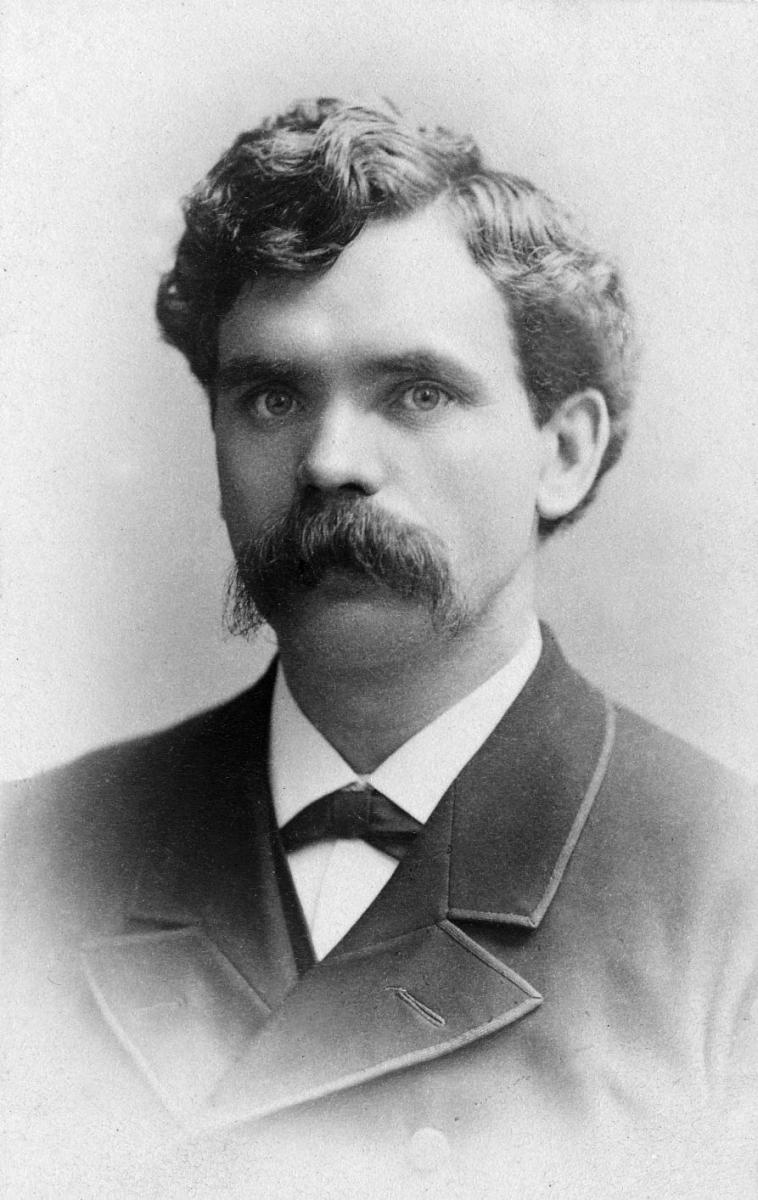 Elderberry Brigham H. Roberts published manufactures and tracts to help fix missionaries. © Intellectual Reserve, Inc.
Central to Roberts's approach was a systematic presentation of eight tracts as part of the finding and teaching procedure. Roberts referred to the first two as "drop tracts" considering the missionaries distributed them without personal contact. He assumed that by post-obit upward on these tracts, missionaries would increase their education opportunities. When this happened, the missionaries presented tract number three, which focused on the Joseph Smith account, in a teaching setting. During the teaching process, missionaries taught concepts from tracts iv and 5, which covered the Book of Mormon and the restoration of the priesthood. If the investigator remained interested, they would and so present a series of four tracts titled Why Mormonism? (ca. 1900). [29] In following this organisation, missionaries distributed large numbers of the initial tracts with the hope that these tracts would attract interest in the Church. When this occurred, they would sequentially discuss the tracts prescribed in Roberts's system. This arrangement of tracts divers both the method of attracting interest every bit well as the content taught to the investigator.
While it was a stride forward in helping missionaries become more than effective, Roberts's method represented the prevailing perspective on missionary methods, which assumed that published tracts were essential to the content and organisation of the education approach. From this perspective, mission leaders causeless that, if given improved religious tracts, the missionaries would be amend prepared to know how to teach the gospel. For this reason, Church leaders such as Elders James Due east. Talmage, Charles W. Penrose, and John A. Widtsoe published materials such as The Great Apostasy (1909) [xxx] and the series Rays of Lite (ca. 1900). [31] Other tracts appeared in addition to those mentioned above, some written by the missionaries themselves to accost a specific need or interest, such as apostasy or the program of salvation. [32] The tone and style of the tracts during this period remained formal rather than adapting the innovations exhibited in popular periodicals of the time.
Development of Teaching Plans
In efforts to meliorate prepare an expanding missionary force, the more conservative chemical element continued to focus on the tracts used by the missionaries, believing that the tracts needed revision because they focused on "dogma and authority" rather than being people centered or dealing with matters of real interest to possible contacts. [33] Therefore, tracts such as What Mormons Believe (ca. 1900) [34] and Ben E. Rich's Friendly Give-and-take (1906) [35] became popular considering they presented the gospel message logically and in a populist style. [36] Rich'due south pop Friendly Give-and-take became the start effort to present the gospel in a narrative format, which influenced later developments in missionary preparation materials. [37]
Rich described his arroyo as a conversation because his fashion conveyed information through a narrative that was "at once unproblematic and agreeable." [38] The account presented a simulated dialogue between Rich and an imaginary "Mr. Brown" and others who were non members of the Church building. To fix the stage for the invented word, Rich asked the group if he might pose a few questions equally part of a word on religion. He then proceeded to present a serial of scripture references, followed by questions designed to elicit discussion from those listening. A civil and polite tone characterized the scripture-centered give-and-take. The supposition throughout the narrative was that the best way to explain the message of the restored gospel was through a biblical perspective. Often Rich's questions were rhetorical, but on occasion they were direct and required an answer from his characters. The give-and-take ended with Rich calling upon Mr. Dark-brown to obey the principles discussed, simply information technology did non include a specific baptism claiming.
In 1930, new developments significantly changed the way missionaries taught the gospel. LeGrand Richards, president of the Southern States Mission, devised an improved system for teaching the gospel. For his Message of Mormonism (1939), [39] Richards seemed to adopt the tone and manner of Rich'due south Friendly Discussion as a gospel-teaching approach. Still, he institute Rich's work inadequate because it lacked the construction necessary for missionary preparation. To construct such a arrangement required defining key concepts, describing essential information, and providing a method of engaging the potential convert. Seeking to develop a systematic arroyo, Richards created a collection of 20-four lessons, later called discussions, which directed missionaries to teach their investigators "once a calendar week for at least six months . . . and present our bulletin in a systematic and orderly manner." [40] The Bulletin of Mormonism defined a sequence of key topics and supplementary readings and references, accompanied by review questions at the end of each discussion topic to engage the investigator. [41] The purpose of the questions was twofold: to enable the missionaries to engage the investigators in a gospel discussion, and, at the same time, to provide a framework for the missionary to understand what he should teach. Richards carefully organized his presentation sequence followed by questions designed to develop investigator interest. [42] By doing this, Richards moved away from the traditions of the spontaneous itinerant preachers and their tracts toward a managed, systematic approach to teaching the gospel.
Richards intended that his system would bring construction to missionary teaching and satisfy two major needs evident at the time. First, the plan provided the inexperienced missionary with carefully written instructions defining what to teach. Second, the questions following the textual information provided the missionaries with a guide to their own learning and with means to engage the investigator in a gospel discussion. These materials proved very popular with other missions and contributed to the increased success of missionaries during the 1930s.
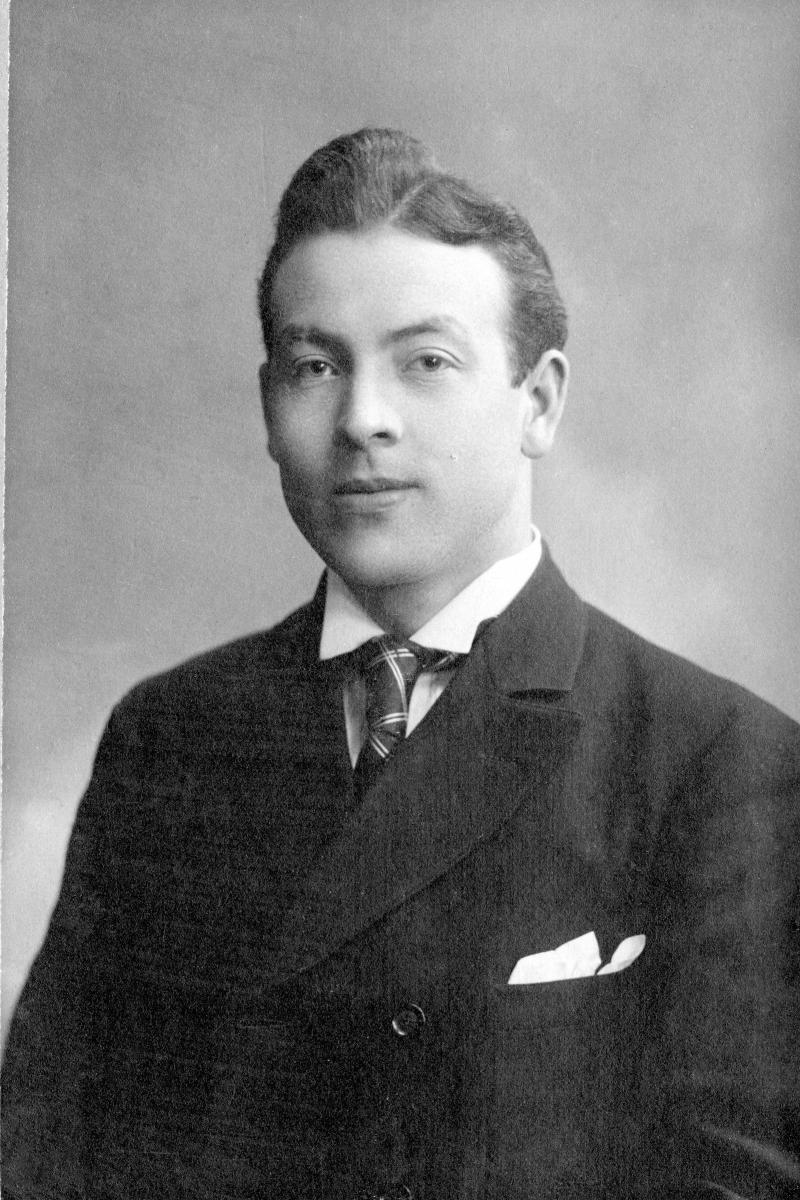 Elder LeGrand Richards, pictured here as a young man between 1906 and 1909. As a mission president, Elder Richards developed a arrangement to help bring structure to missionary teaching. © Intellectual Reserve, Inc.
While Richards focused on improving instruction, the Church adult a general guidebook for missionary service. In 1937, the Church published The Missionary Handbook, [43] in the tradition of earlier missionary guides such as The Elders' Reference and The Elders' Transmission. Like the before publications, the handbook provided a standard set up of instructions for missionary conduct, expectations, and full general guidelines. While it did non provide lesson material as found in the work of Richards, the handbook did provide examples of first-contact dialogue. [44] In the future, this feature would serve every bit a precedent for those interested in developing missionary guides with a standard presentation. [45] One example of dialogue was this leading question: "In this age of so much religious defoliation would it not be a fine thing if we could receive more calorie-free from the heavens to aid in showing us the truthful religious philosophy?" [46] The Handbook as well suggested that the missionaries use commercial books such as A Picture show Story of Mormonism or The Mormon Study to supplement their educational activity. The utilise of such populist books served as the foundation for the afterward development of works such as the popular Meet the Mormons, [47] extensively used by missionaries decades after. [48] For handling investigator objections, the handbook also provided models, in the class of lectures that relied on a formal presentation of scripture-based ideas, to convince the investigator of the truth. While the handbook did not provide specific preparation in education, it did introduce a dialogue model for contacting investigators and a clarification of standardized missionary practices and policies.
Postwar Development of Materials and Methods
At the end of Earth State of war II, members of the Church building worked diligently to restore normal patterns of Church service. Returning servicemen accepted calls to serve missions, resulting in a dramatic increase in the number of missionaries—from 400 called in 1945 to 2,297 called in 1946. Many of these new missionaries found the experience hard considering of an insufficient number of knowledgeable missionaries available to train the new elders. [49] Considering of this, mission leaders increased their focus on the preparation and preparation of the newly expanded missionary force.
One postwar missionary, Richard L. Anderson, described how the lack of experienced missionaries influenced the work, saying, "There was nobody to teach [us] on an apprenticeship basis." [50] Without a formal grooming system, many missionaries sensed a need to improve the effectiveness of their work and began to develop their own approaches. The work of LeGrand Richards served as the foundation of many of these innovations. While stationed in the South during the war, Anderson made his own endeavor, drawing from his prior experience every bit a stake missionary. [51] In the S, he had an opportunity to meet and converse with returned missionary servicemen and enquire them for pedagogy ideas that had worked for them. From these experiences, he created a plan that, while not wholly original, did present significant new developments. Anderson'southward plan, also as others, shared Richards'southward philosophy that missionary teaching should exist guided by a structured system.
When Joel Richards, a brother of LeGrand Richards, accepted an appointment to serve as the president of the Northwestern States Mission, he had "considerable anxiety and [was] very much concerned over how [he] could best help [the] missionaries to systematically written report the gospel and present it in a logical and convincing mode." [52] Presently after his inflow in the mission field, he met Richard Anderson, one of his missionaries. Anderson shared his teaching plan with his president, who recognized the value of the elder'southward work. Richards published Anderson's plan under the title A Programme for Effective Missionary Work, but the missionaries before long commonly referred to it as the Anderson plan. Within two years, the Northwestern States Mission experienced extraordinary success every bit convert baptisms reached the one yard mark—"an increase of 255 percentage." [53] President Richards said of Anderson's endeavor, "It has been demonstrated that this plan really works and gets results when used properly and presented under the influence of the Spirit of God." [54] Presently other missions requested the plan, resulting in thousands of copies beingness printed throughout the Church for missionary use.
The Anderson plan was unique because it had a definite focus on the object and purpose of a mission and on the need for improved skill in teaching. Anderson believed that in that location was no room for a passive approach. He urged missionaries to identify the Book of Mormon wherever they could and encouraged them to stress "the Book of Mormon equally a basic ingredient for missionary piece of work." [55] The plan stated, "We would improve understand our purpose in tracting if nosotros termed it personal contacting. . . . Passing out literature is not constructive didactics—the object is to become inside." [56] Every bit The Missionary Handbook did, Anderson provided a suggested dialogue to utilise when first meeting people. Dissimilar previous dialogues, even so, Anderson's narrative scripted what to say when first meeting a contact and how to introduce the Book of Mormon as a witness of Christ. For each of the logical transitions in the material that followed, Anderson provided specific dialogue that anticipated and directed investigator responses. [57]
Following the initial contact dialogue on the Volume of Mormon, Anderson's program became more similar to the Richards program, which presented information in a narrative grade, followed by a variety of questions. Both plans presented a chain of scriptural references used to introduce each topic, followed by a serial of questions that assisted the missionary in condign familiar with the fundamental concepts. Similar Richards, Anderson provided a multifariousness of discussion topics that the missionary would teach over a period of several weeks, ranging from apostasy to the duties of membership. Because the program included scripted text, missionaries began memorizing the dialogue. Later Anderson returned home, several missions invited him to teach their newly called missionaries about his successful plan. Of his experience, he recalls, "I tracted with missionaries and think in Colorado, a very vivid missionary giving exactly the words of the presentation in the 'Anderson Plan.' They were my words, but it did not audio sincere on his lips. When nosotros were through, I said, 'I simply have i proposition, scrap the memorization and tell it in your own words because that's the affair that's going to make it successful and meaningful to the person.'" [58] However, it was non long before an expanded use of memorized dialogues became prominent in the Church building'due south missionary efforts. [59]
In 1954, Church building leaders reorganized the various missionary departments nether a full general Missionary Commission. This new committee accepted the previous efforts of Gordon B. Hinckley, the new executive secretary of the Missionary Committee, who had invited returned missionaries to Salt Lake to discuss the teaching plans they had each developed. Richard L. Anderson, a college student at the fourth dimension, accepted the invitation with many others and met with Hinckley to hash out his particular teaching method. Hinckley interviewed each returned missionary looking for ideas that would assist in the evolution of a new missionary arroyo. Eventually, he recommended "that the Missionary Section adopt a uniform curriculum." [threescore] Under Hinckley's leadership, the Church developed its first official gear up of standard missionary lessons known as A Systematic Programme for Teaching the Gospel (1952). [61]
The new Systematic Programme unified the missions of the Church by standardizing the teaching approach for all missionaries. It organized the fabric in two sections. The first section contained four headings, "The Four Phases of Proselyting," while the second section independent the seven private teaching lessons. Unlike prior missionary guides, such every bit The Elders' Manual and The Elderberry's Handbook, the Systematic Plan focused directly on the business organization of becoming successful in finding, instruction, and converting potential members of the Church. Under the subheading "How to Make the First Contact," the narrative instructed the missionary to work "with one single object in mind"—to secure a teaching date. [62]
The 2nd segment, "From Contact to Investigator," began by encouraging the missionary to maintain a positive perspective and to presume that the contact will be receptive. [63] The plan'south narrative warned against being too hasty in assuming that a person would not be interested and encouraged missionaries to persist in their effort to teach. For example, if in that location was no answer when the missionaries knocked on the door at the appointed time, they were to locate a phone and call the person and employ the dialogue provided for this occasion in an endeavor to secure another appointment. The word ended with a sales mantra: "If you are persistent, y'all will savour success." [64]
Under the 3rd heading, "Teaching the Investigator," instructions invited the missionary to "seek the guiding influence of the Spirit," followed past counsel regarding the need for enthusiasm, simplicity, and testimony. [65] Practical advice regarding where to sit in the room when pedagogy, how to arrange didactics materials, and how to discover and compliment the contact completed the segment. The terminal discussion focused on strategies for overcoming objections and reservations that might arise during the teaching state of affairs. The final part, "From Investigator to Convert," explained that individuals typically exercise non take missionary invitations because of their "false pride" and "unrighteousness." In spite of this, the missionary must "ever work toward the goal of baptism," remain positive, and seek to develop a friendship with their contact. [66]
Section two of the Systematic Program provided seven scripted lessons. Similar the Richards plan and the Anderson plan, each lesson began with an annotated list of key scriptural references used to support major topic points, followed by a "sample dialogue" that was similar in design to those found in the first of The Missionary Handbook and in the Anderson Program. The pattern of the questions in the dialogue required simple call up of information presented. For instance, the elder would inquire, "We accept discovered that God has a body of what?" The anticipated answer from the investigator would be "Flesh and bones." [67] Using the scripted dialogue, the missionary then led the investigator into the next lesson concept. The dialogue engaged the investigator and provided positive reinforcement for participation. At start, mission leaders instructed missionaries non to memorize the lessons. The plan states, "Each presentation must be suited to the needs and interests of the individual y'all are instruction. . . . Without the Spirit of the Lord you have no manner of knowing the needs of your investigator." [68] In spite of these instructions, many mission presidents encouraged memorization, believing that missionaries would be more prepared if they memorized the lesson scripts.
One unique development in the Systematic Programme approach was the inclusion of suggested drawings and illustrations to enhance investigators' understanding. For example, in lesson six, "The Programme of Salvation," the missionary was to draw circles to stand for the premortal life, earth life, the spirit earth, and the three degrees of glory. This was the first formal utilise of what would become the standard method of illustrating the plan of salvation throughout the Church for years to come up. Post-obit instructions provided by the lesson and using the models provided in the lesson material, the missionary created the illustration during the lesson. Afterwards, the Missionary Department distributed a flannel board bundle as an boosted teaching aid that formalized the suggested drawings. [69] The use of media, illustrations, and other aids to teaching and learning proved as effective in gospel presentations as they were for sales presentations.
While the Systematic Program proved successful in supporting and training missionaries, the Missionary Commission felt the demand for farther changes in the educational activity materials. [70] In 1961, the Church Missionary Department presented a new set of missionary lessons titled A Uniform System for Teaching Investigators [71] at the commencement worldwide seminar for mission presidents, held in Salt Lake City. [72] Employing a standard dialogue technique, the Uniform Organisation provided a detailed teaching script that specifically guided the investigator to baptism. [73] Seeking uniformity in the missionary teaching arroyo, the Church directed that the Compatible System should supervene upon all one-time missionary plans. [74] The programme states: "Follow the handbook dialogues. Stick to the logic and scriptures given in the dialogues." [75] The Missionary Committee felt the need to move toward dialogue memorization to better set up the missionaries to teach the doctrines of the gospel.
When asked why he felt missionaries were asked to memorize the discussions, Peter Rawlins, a former administrator in the Missionary Section, stated, "My theory is that we've got a mission president with 150 to 200 missionaries, and he doesn't have a lot of command because the missionaries are spread all over the place, and he really has minimal contact with them. And I think it gives him a feeling of control to have some construction and to know what his missionaries are thinking. And when he can . . . have the missionaries pass off sure standards, it conveys a feeling of accomplishment or reaching a sure standard. There is something to that." [76]
Missionaries who memorized the dialogue word for word nicknamed the program the "Mr. Brown discussions" because of the proper noun of the investigator used in the scripted dialogue. [77] While memorization did assistance many immature men and women, peculiarly missionaries called to foreign countries, some institute the structure to be too enervating and rigid and sometimes became discouraged by the chore of memorization. From his experience, one former elderberry described the plan'southward weakness: "[Its weakness] was the rigid approach with no flexibility. We were always trying to keep people on the script. [When people got off track,] the rule was to get them back on the script equally fast as possible." [78] However, non everyone serving during this period shared this perspective. Others believed that the plan provided logical structure and dialogue necessary in committing the investigator to action, which enabled the missionaries to nowadays the remaining office of the message more naturally. [79] Fifty-fifty with such modifications, however, investigators often realized they were participating in a scripted word.
A comparison of the Systematic Program and the Uniform System reveals several interesting differences. The get-go obvious deviation is that the Systematic Program provided forty pages of introductory material while the latter plan provided only two such pages, which focused on general teaching principles and instruction about discussion memorization and the use of the flannel lath visual aids. Like the Systematic Program, the Uniform System provided a list of supporting scriptures that each missionary memorized. Rather than having 7 lessons as in the Systematic Program, the Uniform System had only 6 lessons, because information technology combined the first three lessons of the Systematic Program ("The Godhead," "The Apostasy," and "The Restoration") into ane lesson, "The Church of Jesus Christ." In both lesson plans, similar lessons covered the topics of the Book of Mormon, the first principles of the gospel, and the plan of salvation. However, the Uniform System added a lesson entitled "Ye Shall Know the Truth," which taught how one tin can learn spiritual truth and introduced the Word of Wisdom. The before plan did non introduce that principle until the concluding lesson. The final lesson in both plans challenged the investigator to accept baptism.
In terms of dialogue length, both plans independent nearly 1 hundred pages of teaching dialogue. A side-past-side comparison of the two plans demonstrates a similar approach and line of logic. [80] Nonetheless, the Uniform System contained more direct language and specific questions that enabled the missionary to teach with greater efficiency. [81] While both plans contained dialogue designed to commit the investigator to activity, the commitment pattern was more direct in the Uniform Arrangement. Using an effective commitment technique, the dialogue enabled the missionary to issue specific challenges and encourage obedience to the principles taught. [82] Questions such every bit "Volition you continue to live this commandment?" focused attention on investigator accountability. [83] The more direct dialogue of the Compatible Arrangement reinforced the serious nature of the discussion and the expectation for activity.
To supplement the standard discussions and flannel-board presentation, missionaries developed additional teaching material using Church publications such as the Comeback Era, the Children's Friend, and newly developed tracts. [84] Agreement society'due south preference for visual learning, the missionaries used photos from Church magazines to create colorful and interesting flip charts useful in making successful door approaches and equally an culling to the flannel-board presentation. Other techniques, such as administering surveys and amalgam public displays, broadened the missionary approach. [85] In addition, missionaries oft used Church-produced filmstrips and talks on tape to supplement the give-and-take. [86] By doing this, they paved the way for the expanded use of media and other approaches with which to supplement the basic pedagogy discussions.
In fourth dimension, the limitations of the Compatible System became axiomatic. Offset, memorization of the extensive dialogue proved difficult for the missionaries. The expectation was that each missionary would memorize all the discussions inside a few weeks. Still, this was not the case for some, who spent months struggling to memorize the standard script. Second, the standard dialogue placed investigators in a difficult situation considering they sometimes felt manipulated and even, at times, coerced. Tertiary, the standard dialogue discouraged a real gospel discussion with the investigator, who felt compelled to answer the questions posed in the word rather than initiate chat outside the dialogue. [87] This led the missionaries to an increased use of flip charts, filmstrips, and other media to supplement the lessons and balance their presentation with natural discussion. Finally, the fundamental message of the restoration of the true Church became less relevant to potential investigators coming from an increasingly secular gild. This led missionaries to focus more on the family, which proved to be a common theme more acceptable to investigators. This modify in accent led to further developments in missionary teaching methods that focused on the family.
Conclusion
In the years that followed, the Church faced a chop-chop changing society in which the Uniform Organisation became less relevant. Building on the emerging emphasis on the family unit, Church leaders modified the program to focus on strengthening the family. While the Uniform System discussions remained cardinal to the instruction plan, the presentation sequence became flexible, and lesson supplements focusing on the development of the family became office of the lesson presentation. The doctrine and many of the features remained the same as the previous plan, but mission leaders encouraged more than flexibility and a more than natural teaching presentation. These modifications opened the way for the Church to move abroad from the standard discussions, characterized by their business orientation, to a more open style that enabled the missionaries to adapt their instruction to meet individual circumstances. This trend was to continue for the rest of the twentieth century, leading to the development of the Preach My Gospel plan.
Notes
---
[i] Richard K. Scott, "The Ability of Preach My Gospel," Ensign, May 2005, 29.
[2] Run across John McClintock and James Strong, Cyclopedia of Biblical, Theological and Ecclesiastical Literature (New York: Harper and Brothers, 1879), ten:482–83; and O. C. Edwards, A History of Preaching (Nashville: Abingdon Press, 2004), 403.
[3] For information on the British Mission, run across Bryan J. Grant, "British Isles, The Church in," in Encyclopedia of Mormonism, ed. Daniel H. Ludlow (New York: Macmillan, 1992), 1:227–32.
[four] Yngve Brilioth, A Cursory History of Preaching (Philadelphia: Fortress Printing, 1965), 165. Whitefield established, more than other preachers did at the time, the concepts of "field preaching" and charismatic enthusiasm that characterized the Reformed Protestant preaching of the nineteenth century. Run across O. C. Edwards Jr., A History of Preaching (Nashville: Abingdon, 2004), 434, 439.
[v] Edwards, History of Preaching, 494.
[6] Edwards, History of Preaching, 506.
[7] Edwin Charles Dargan, A History of Preaching (New York: George H. Doran Company, 1912), two:475–76.
[8] The employ of the religious tract dates from beginnings of the Reformation movement in Europe. The reformer Wycliffe distributed hundreds of handwritten tracts every bit part of his public ministry building. The invention of the printing press expanded the use of the religious tract, which led to the institution of tract societies whose principal ministry was the writing and printing of religious tracts. See McClintock and Potent, Cyclopedia, 513. Tract societies distributed hundreds of thousands of tracts in America every bit well as in Europe. Mormon missionaries would have been familiar with their tone, style, and content. See Mark One thousand. Vasquez, "The Portable Pulpit: Religious Tracts, Cultural Power, and the Chance of Reading," American Transcendental Quarterly 16, no. two (June 2002): 89.
[9] Elizabeth A. Livingstone, ed., The Curtailed Oxford Dictionary of the Christian Church (New York: Oxford University Press, 1977), 518.
[x] For a more complete discussion of the development of the use of religious tracts and the establishment of evangelical tracts societies, meet Isabel Rivers, "The First Evangelical Tract Society," Historical Periodical 50, no. 1 (2007): 1–22; and Elizabeth Twaddell, "The American Tract Society, 1814–1860," Church History 15, no. 2 (June 1946): 116–31.
[12] In his address to Christians, Bishop Beilby Porteus highly recommended the use of tracts because they had proven to be "a yard instrument" for the conversion of sinners and "for the betterment and comfort of saints." He also noted that the tract was "a cheap fashion of diffusing the noesis of religion" because they were small and relatively inexpensive to print. Bishop Beilby Porteus, An Address to Christians, Recommending the Distribution of Cheap Religious Tracts (London: Printed for the Religious Tract Club, and sold by T. Williams, Ludgate Hill, 1799), 4.
[13] Parley P. Pratt, Autobiography of Parley P. Pratt, ed. Scot Facer Proctor and Maurine Jensen Proctor (Common salt Lake City: Deseret Book, 2000), 211.
[14] The Millennial Star, The Church of Jesus Christ of Latter-solar day Saints, Manchester, England, 1837, as noted in James B. Allen, Ronald Grand. Esplin, and David J. Whittaker, Men with a Mission, 1837–1841: The Quorum of the Twelve Apostles in the British Isles (Salt Lake City: Deseret Book, 1992), 252.
[15] Orson Pratt, A[n] Interesting Account of Several Remarkable Visions, and of the Late Discovery of Ancient American Records (Edinburgh: Printed by Ballantyne and Hughes, 1840).
[16] William G. Hartley, "The Church Grows in Strength," Ensign, September 1999, 32.
[17] See Joan Smyth Iverson, The Antipolygamy Controversy in U.S. Women's Movements, 1880–1 925: A Debate on the American Dwelling (New York: Garland Publishing, 1997).
[eighteen] B. H. Roberts, The Gospel: An Exposition of Its Outset Principles and Homo'southward Relationship to Deity (Salt Lake City: Deseret Book, 1965).
[19] Franklin D. Richards, A Compendium of the Doctrines of the Gospel (Salt Lake City: George Q. Cannon and Sons, 1892).
[twenty] James E. Talmage, The Articles of Faith: A Series of Lectures on the Principal Doctrines of the Church of Jesus Christ of Latter-mean solar day Saints (Table salt Lake Urban center: Deseret News, 1899).
[21] Meet Elders' Journal, September 1903, ane–iv. During the offset decade of the twentieth century, this journal of the Southern States Mission and its successor, Liahona, The Elders' Journal, provided helpful, field-tested ideas for missionaries.
[22] Ben E. Rich, The Elders' Reference (New York: Eastern States Mission, 1913). Published past Rich while serving as president of the Southern States Mission, the text independent topics such every bit "Avoid Contention and Debate," "How to Baptize," "Proper Kind of Wearable to Wear," and "Counsel to Returning Missionaries." Some effort was fabricated to provide specific teaching methods under headings such as, "The Key to Apostasy," and "Key to Saving Our Dead." There was little effort to organize the topics or suggest a system for their presentation during the pedagogy process.
[23] Joseph F. Smith, The Elders' Manual (Independence, MO: Central States Mission, 1918). Published by the Outset Presidency, the Manual provided practical counsel to the missionaries nether headings such as "Duty of the Senior Elderberry," "Personal Purity and Cleanliness," and "Photo and Articles." Topics related to teaching included "Let the mysteries solitary," "Teach the Law of Tithing to the Saints," and "The Sacrament." Other manufactures focused on Church administration and the performance of ordinances.
[24] For further data, see Jay E. Jensen, "The Result of Initial Mission Field Training on Missionary Proselyting Skills" (chief's thesis, Brigham Young Academy, 1988), 27.
[25] Robert Due east. Lund, "Proclaiming the Gospel in the Twentieth Century," in Out of Obscurity: The Church in the Twentieth Century (Salt Lake City: Deseret Book, 2000), 229.
[26] B. H. Roberts, On Tracting (Independence, MO: Zion's Press and Publishing Company, 1924).
[27] Roberts, On Tracting, ane, iii.
[28] Roberts, On Tracting, xi.
[29] B. H. Roberts, Why Mormonism? (Independence, MO: Zion's Press and Publishing, ca. 1900).
[30] James East. Talmage, The Great Betrayment (Salt Lake City: Deseret News, 1909).
[31] Charles W. Penrose, Rays of Low-cal (Independence, MO: Zion's Printing and Publishing, ca. 1900).
[32] Jay E. Jensen, "Proselyting Techniques of Mormon Missionaries" (main's thesis, Brigham Young Academy, 1974), 21.
[33] LDS tracts tended to follow the tone of other Christian tracts. Perceived equally a mode to influence the "passive listen of the reader," the typical Church-produced tracts had an authoritative and declarative tone. See Vasquez, "The Portable Pulpit," 89. See besides Lund, "Proclaiming the Gospel in the Twentieth Century," 229, who argues that the defensive nature of the tracts reflected a response to the negative public opinion of the Church building that characterized the age.
[34] Charles W. Penrose, What "Mormons" Believe, every bit cited in Elders' Periodical, September, 1904, 2–8.
[35] Ben East. Rich, Friendly Discussion (Kansas Urban center, MO: Key States Mission, 1906).
[36] Lund, "Proclaiming the Gospel in the Twentieth Century," 229.
[37] The success of Friendly Discussion surprised many. Over three meg copies of the pamphlet appeared in impress between 1893 and 1905. Its distribution exceeded that of the Volume of Mormon during this period.
[38] Ben E. Rich, Mr. Durant of Salt Lake City, "That Mormon" (Salt Lake Urban center: George Q. Cannon and Sons, 1893), one. Rich used his earlier pamphlet Mr. Durant of Salt Lake City as the basis for his Friendly Discussion text.
[39] LeGrand Richards, The Message of Mormonism (Southern States Mission, 1939). Richards designed a lesson outline that assumed one lesson a week for six months. He provided sufficient content for missionaries to teach investigators. Richards would afterward revise this material and publish it under the title A Marvelous Piece of work and a Wonder (Salt Lake City: Deseret Volume, 1976).
[twoscore] Richards, Message of Mormonism, 2.
[41] Richards's materials also directed missionaries to begin keeping sales-like records of the people they taught. He asked them to keep an investigator record book that should "exist kept not bad, accurate, and upwards-to-date" and reminded them, "The value of this tape of investigators is nigh significant." Richards, Message of Mormonism, 1.
[42] Richards appeared to accept the business aphorism of the time "Selling is not telling," considering his systematic plan appeared to reverberate the business marketing models of the time. For typical discussions that reverberate the concern adage "Selling is not telling," see Abhay Padgaonkar, "Telling Ain't Selling," Business organization Know-How, accessed January 10, 2010, http://
[43] The Missionary Handbook (Independence, MO: The Church building of Jesus Christ of Latter-day Saints, 1937).
[44] The sample dialogues appear to be the work of former missionaries. The format of these dialogues varies from an actual dialogue to kickoff-person accounts of missionary experiences.
[45] Lund, "Proclaiming the Gospel in the Twentieth Century," 229.
[46] Missionary Handbook, 79.
[47] Doyle L. Green, Meet the Mormons: A Pictorial Introduction to the Church of Jesus Christ of Latter-mean solar day Saints and Its People (Salt Lake Urban center: Deseret Book, 1965).
[48] Jensen, "Proselyting Techniques of Mormon Missionaries," 20.
[49] Jensen concluded that the on-the-job preparation provided by senior companions (missionaries with the virtually experience) was the main method of grooming missionaries how to tract and teach. Therefore, the lack of experienced missionaries resulted in a corresponding lack of training afterwards World State of war Ii. Run into Jensen, "The Effect of Initial Mission Field Grooming on Missionary Proselyting Skills," 23.
[50] Richard L. Anderson, interview by Janine Gallagher Doot, January 28, 2008, 2, transcript in author'southward possession.
[51] Because Anderson served in the wartime S, those with whom he spoke were likely familiar with the Richards plan. This, in plow, provided Anderson with a starting bespeak for the development of his own missionary teaching program.
[52] LeGrand Richards, introduction to A Program for Effective Missionary Work, past Richard L. Anderson (Portland, OR. Northwestern States Mission, 1950).
[53] Richards, introduction to Program for Effective Missionary Work, north.p. It remains doubtful that the Anderson Plan directly created the increased growth in the Church in the Northwest. Rather, it seems more probable that sociological and economic factors created past the postwar climate contributed to this increased growth. However, information technology does appear that the Anderson Plan facilitated the teaching of the expanding number of investigators brought almost by the postwar environment.
[54] Richards, introduction to Programme for Constructive Missionary Work, n.p.
[55] Anderson, interview, 8.
[56] Anderson, Program for Effective Missionary Work, 3.
[57] Anderson, Program for Effective Missionary Work, 3.
[58] Anderson, interview, 8.
[59] The utilize of dialogue, every bit found in The Missionary Handbook and Anderson's plan, appears like to innovations that characterized the business marketing advances early on in the twentieth century. 1 of the start to employ a standard sales dialogue was John H. Patterson, president of the National Cash Register Company (NCR), who developed the "canned sales talk." This innovative sales approach revolutionized sales in the early decades of the twentieth century equally businesses began to provide systematic training and support for their sales employees. The arroyo provided salesmen with printed product materials and prepared a dialogue for utilize when coming together with customers. The goal of managed sales was to train employees in understanding products and to teach them how to present their product to a potential buyer. The widespread apply of the managed sales approach may have influenced those developing missionary materials. See Laura Linard, "Birth of the American Salesman," Q&A with Walter A. Friedman, Working Knowledge, Harvard Business organization School, accessed January 23, 2011, http://
[60] Sheri L. Dew, Go Frontward with Religion: The Biography of Gordon B. Hinckley (Common salt Lake City: Deseret Book, 1996), 154.
[61] A Systematic Plan for Teaching the Gospel (Common salt Lake City: Deseret News Press, 1952). Allen observed that the Systematic Programme was "the same plan" adult by Elder Willard A. Aston in the Great Lakes Mission. Allen did not mention Anderson and his possible influence on the development of the first set of discussions. Come across James B. Allen and Glen M. Leonard, The Story of the Latter-day Saints (Salt Lake Urban center: Deseret Volume, 1976), 567.
[62] Systematic Program, 12. The suggested missionary dialogue appears like to the standard business sales dialogues of the time. For case, in making an date for teaching, the missionary would ask, "Would information technology exist more than convenient for you in the morning or afternoon?"
[63] The positive mental attitude reflected in the cloth parallels the prevailing perspective of many of the cocky-assist business books published in the years prior to the Systematic Program.Typical of the self-help genre were Napoleon Hill's influential 1937 work Think and Abound Rich (Aukland: Floating Press, 1937) and the piece of work of W. Cloudless Stone, who fabricated pop the phrase "positive mental attitude." See Forrest Wallace Cato, "The Last Interview with Manufacture Legend: W. Clement Rock," Register, August 2006, three–5.
[64] Systematic Program, nineteen–xx.
[65] Systematic Programme, 22–24.
[66] Systematic Programme, 34–36.
[67] Systematic Program, 33.
[68] Systematic Program, 22.
[69] Allen and Leonard, Story of the Latter-day Saints, 567–68.
[70] Allen suggests that considering the Systematic Program was non mandated, missions continued to develop their own plans independent of the Church. Because of a desire to standardize the grooming of missionaries, the Missionary Department created a new uniform plan for all missions. See Allen and Leonard, The Story of the Latter-solar day Saints, 568.
[71] A Uniform Organisation for Teaching Investigators (Common salt Lake City: The Church of Jesus Christ of Latter-day Saints, 1961).
[72] Run across R. Lanier Britsch, "Missions and Missionary Work," in Encyclopedia of Latter-twenty-four hour period Saint History, ed. Arnold K. Garr, Donald Q. Cannon, and Richard O. Cowan (Salt Lake City: Deseret Volume, 2000), 764.
[73] More than any previous plan, this new arroyo paralleled the standard dialogue start promoted as a business organization marketing technique. This method causeless that a standard sales dialogue was important in approaching a customer, propositioning them, didactics or demonstrating product advantages, and closing with a challenge to buy. The dialogue also provided narrative designed to overcome objections and redirect concerns. Run into Walter A. Friedman, "John H. Patterson and the Sales Strategy of the National Greenbacks Register Company, 1884 to 1922," Working Knowledge, Harvard Business Schoolhouse, accessed January 30, 2011, http://
[74] Garr, Cannon, and Cowan, Encyclopedia of Latter-twenty-four hour period Saint History, 764.
[75] Uniform Organisation, three.
[76] Peter Rawlins, interview past the author, December 4, 2007.
[77] Information technology may be a coincidence that the investigator in Ben E. Rich's Friendly Discussions was also Mr. Brown.
[78] Rawlins, interview.
[79] This perspective is that of the author, who served in the England E Mission from 1968 to 1970.
[80] For such a comparison see James-Charles Duffy, "The New Missionary Discussions and the Hereafter of Correlation," Sunstone, September 2005, 28–46.
[81] For the purpose of illustration, a brief examination of the programme of salvation give-and-take reveals representative similarities and differences. Both plans begin with a review give-and-take of the previous lesson and the related investigator commitments, followed by an introduction to the doctrine of premortal life, beginning with Moses 3:five. In comparing the actual dialogues, the Systematic Plan narrative appears less precise because the Uniform System dialogue prompts the missionary to summarize in succinct sentences and pose leading questions. Equally the lesson continues, the Systematic Program introduces the office of Lucifer in mortal probation, while the Uniform Organisation makes no mention of Lucifer but does teach that mortality is a exam. Both lessons then explain the doctrine of the spirit globe and the doctrine of vicarious temple ordinances. The terminal section of each lesson focuses on the three degrees of glory, with the Uniform System providing over two pages of dialogue, compared to a unmarried page in the other programme. In summary, the Uniform System builds on the concept that humans come from the presence of their Male parent in Heaven and that through obedience and resurrection, they can return to live with him.
[82] The commitment dialogue parallels that used in the business sales industry. It is not known how these practices influenced those who were developing the missionary teaching plans.
[83] Compatible System, 72.
[84] Jensen, "Effect of Initial Mission Field Preparation," 24. Church building tracts at this time reflected mod graphics and design. This populist style increased the tracts' usefulness with investigators.
[85] As with previous missionary efforts, Church practices appeared to parallel successful business practices to facilitate the finding and teaching process. Nowhere is this practice more than evident than in the use of the "religious survey." Building on the common do of using surveys to concenter and influence potential customers, mission leaders created surveys of their own to interest people in the Church building. For example, in ane approach, missionaries would ask those they met to assist them with a survey. This proved to be an effective style to engage contacts in a gospel discussion.
[86] One example of adapting media for missionary teaching came from the Church'southward experience in the 1964–65 World's Fair held in New York Urban center. Building upon the success of the picture show Human'south Search for Happiness, the Church produced a filmstrip version with an accompanying tape recording, which missionaries apace adopted as part of their introduction to the Church.
[87] George T. Taylor, "Furnishings of Coaching on the Development of Proselyting Skills Used past the Missionary Training Center, The Church building of Jesus Christ of Latter-twenty-four hours Saints in Provo, Utah, 1986" (PhD diss., Brigham Young University, 1987), 20.
Source: https://rsc.byu.edu/go-ye-all-world/missionary-materials-methods
0 Response to "Review of Baptism in the Holy Spirit Initial Evidence and a New Model by Gordon L Anderson"
Postar um comentário